
Incident Response
Active breach? We respond within 30 minutes.
Rapid-response cybersecurity engagement for active or suspected incidents. We contain, eradicate, and recover — then run a forensic post-mortem so it doesn't happen twice. 30-minute response SLA when retained in advance.
ROE signed before any work · 30 minutes response
The short answer
Incident response services are an engagement in which senior responders take over an active or suspected breach: contain the spread, eradicate the attacker's access, recover systems onto hardened baselines, and reconstruct a forensic timeline for regulators, insurers and the board. An incident response retainer, often called a corporate forensic retainer, pre-arranges contacts, access and a signed engagement so the first hour is spent responding, not onboarding. AnySec responds for casinos, crypto exchanges, banks and fintech platforms from €3,500 per incident.
The problem
A signed retainer isn't the same as a rehearsed one.
Retainers that were never tested
The named contact from onboarding left the company, the pre-provisioned access expired with a credential rotation nobody re-tested, or the trigger table was written but never reviewed by whoever is actually on call at 2 a.m. A retainer is only as fast as its last rehearsal.
Cold engagements start from zero
Without a retainer, the first hour goes to getting oriented — confirming scope, requesting access, understanding the stack — before containment work can even begin. That's the hour a live foothold does the most damage.
Generalist responders without stack or industry context
A responder who has never worked your platform, your compliance obligations, or your architecture spends billable hours re-learning what a retained team already knew going in.
Notification clocks that don't pause for forensics
GDPR's 72-hour and NIS2's 24-hour reporting windows start counting from the moment you're aware of an incident, not once containment finishes — a response that only produces a regulator-ready report at the very end is already behind the clock.
Scope of work
What's included
Everything below is delivered by senior engineers — no scanner-only reports, no junior hand-offs.
- 30-minute response time when on retainer
- Immediate triage and containment
- Eradication of attacker presence
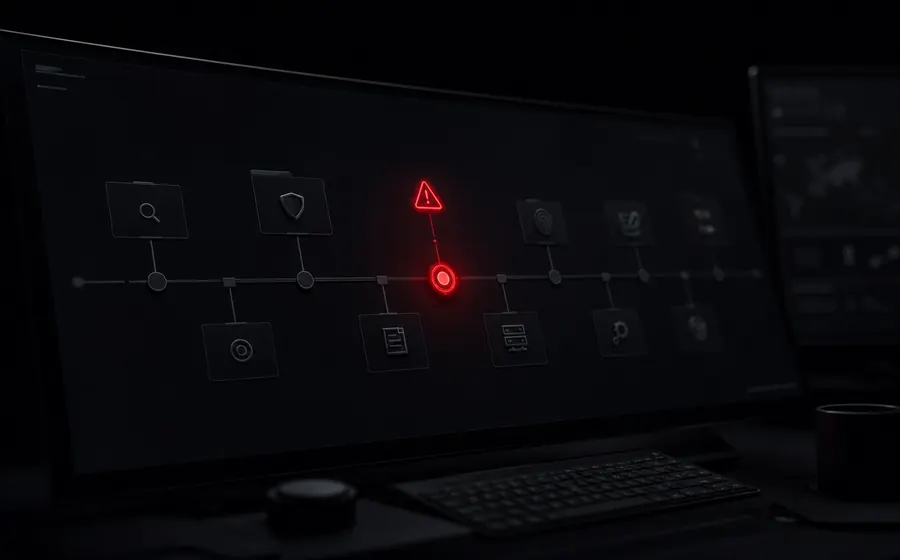
- Forensic timeline reconstruction
- Recovery validation and hardening recommendations
- Post-incident report for regulators and stakeholders
Methodology
How we run it
- 01Triage: classify severity and contain spread
- 02Eradicate attacker presence and persistence
- 03Recover affected systems with hardened baselines
- 04Forensic analysis with full attacker timeline
- 05Post-incident hardening to prevent recurrence

Comparison
IR retainer vs cold call.
| Feature | AnySec | Generic firm | DIY |
|---|---|---|---|
| Response time | 30 min on retainer | 4–24 hours typical | Hours to days |
| Pre-engagement context | We know your stack already | Start from zero | Your team in firefight mode |
| Regulator-ready reporting | Included | Add-on | Your responsibility |
“AnySec was on a Zoom with our SOC 23 minutes after our pager fired. Within 90 minutes the attacker had no live foothold. Game-changing.”
— Director of Security · European fintech (Series C)
Deliverables
What you receive
- Forensic timeline with attacker actions
- Containment and recovery documentation
- Hardening recommendations
- Regulator-ready incident report
Our commitments
Skin in the game.
- 30-minute SLA on retainer — refunded if missed
- Direct senior engineer on every escalation, no triage queue
- Regulator-ready report within 5 business days of containment
FAQ
Questions we get asked
Can we retain you in advance?+
Yes — and you should. Advance retainers get the 30-minute SLA. Cold engagements still get rapid response but no formal SLA.
Do you coordinate with law enforcement?+
If you direct us to. We never contact law enforcement without your authorization.
What counts as an incident worth calling you for?+
Ransomware or suspected ransomware, a confirmed intrusion, data exfiltration, suspicious privileged-account activity, or a DDoS beyond your provider's capacity. Call early — a false alarm costs far less than a foothold that spreads while you deliberate.
Do you help with GDPR or NIS2 breach notification?+
Yes. We produce a regulator-ready incident report and help you meet notification timelines, including the GDPR 72-hour window and NIS2 reporting obligations for in-scope entities.
What do you need from us to start?+
A point of contact, access to the affected systems, and a signed engagement. On a retainer we collect all of this in advance, which is what makes the 30-minute SLA real — a cold engagement spends its first hour just getting oriented.
Is an incident response retainer the same as a PCI Forensic Investigator (PFI)?+
No. The retainer buys containment, eradication, recovery and a forensic timeline for your own decisions and regulators. A PCI Forensic Investigator is a firm listed by the PCI Security Standards Council to establish, for the card brands and your acquirer, whether account data was compromised; it is usually triggered by your acquirer agreement after a suspected card-data compromise, not by your own choice. A payment platform can need both. Ask the PFI question in writing before you sign: whether the retainer provider would act as the PFI, coordinate with the one your acquirer accepts, or help you select one, and have the retainer record the answer and the evidence handover.
Read more: PCI Forensic Investigator vs incident response retainer: who does what
What does the incident response report contain?+
A timeline in one time zone, the scope of affected systems and data, the root cause stated with its evidence or an honest statement that it is unconfirmed, every containment and recovery action with who authorised it, the evidence held and how it was preserved, what remains open with owners, and the limits of the investigation. We produce a technical version for your engineers, a shorter management version for the board, and a redacted version for regulators, insurers or payment partners from the same body of evidence, so each reader can re-check the claims rather than take the narrative on trust.
More from AnySec
Related cybersecurity services
Incident Response pairs with the rest of the AnySec catalog — offensive testing, 24/7 defensive operations, incident response, and resilient infrastructure, all delivered by the same EU-registered team.
Further reading
Before you buy: Incident Response
Scoping, pricing and buyer-side checklists written by the engineers who deliver this service.
Response · IR-RAPID
Ready to start Incident Response?
Request a fixed quote, or ask a question first. 30 minutes response either way.
ROE signed before any test fires · varies (rapid response)