
Vulnerability Assessment
Understand your security posture — comprehensively and quickly.
Broad-coverage scan + manual validation of your attack surface. Faster and cheaper than a full pentest, but with manually verified findings instead of false-positive noise. Ideal as a baseline before an audit or for ongoing visibility.
ROE signed before any work · 30 minutes response
The problem
Scanners are cheap. Signal is not.
Raw output buries the signal
An unfiltered scan of any real estate returns hundreds or thousands of findings, and a large share are false positives. Someone still has to separate the real ones — and that someone is usually your busiest engineer.
CVSS alone misprioritizes the work
A critical on an isolated staging box can outrank a medium on your payment path. Severity scores without business-impact context send your team to fix the wrong things first.
Audit-driven timing leaves drift
A scan run once a year for the auditor says nothing about the other eleven months. Estates change weekly; posture visibility has to recur or it's a snapshot of history.
False positives erode trust in the process
After engineering chases the second phantom finding, reports stop being read. Unvalidated results don't just waste hours — they train your team to ignore the report that one day holds a real critical.
Scope of work
What's included
Everything below is delivered by senior engineers — no scanner-only reports, no junior hand-offs.
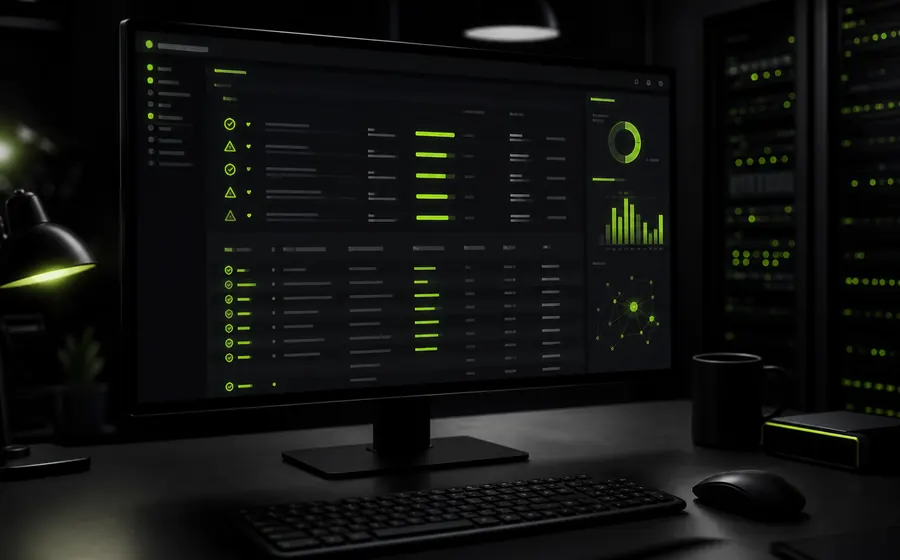
- Automated scanning across external and internal surfaces
- Manual validation to eliminate false positives
- Prioritized findings by exploitability and business impact
- Quarterly or monthly recurring option available
- Compatible with audit requirements (PCI-DSS, ISO 27001)
Methodology
How we run it
- 01Scope definition and authorization
- 02Automated scanning across surfaces
- 03Manual triage and false-positive removal
- 04Risk-prioritized reporting

Comparison
VA vs scanner-only services.
| Feature | AnySec | Generic firm | DIY |
|---|---|---|---|
| False-positive rate | <5% after manual triage | 30–70% from raw scanners | Whatever your scanner gives you |
| Business-impact context | Per-finding business rating | CVSS only | Tool default |
“Our auditor accepted AnySec's VA as-is. The previous Nessus-only deliverable would have been bounced for being raw scanner output.”
— Compliance Lead · EU regulated fintech
Deliverables
What you receive
- Prioritized vulnerability list with CVSS and business-impact rating
- Recommended remediation actions
- Audit-ready findings summary
Our commitments
Skin in the game.
- Every finding manually validated — no scanner-only entries
- Audit-friendly format accepted by major frameworks
- Same-week delivery available
FAQ
Questions we get asked
How is this different from a pentest?+
VA is breadth-first and faster. Pentest is depth-first and proves exploitability with chains. Most clients run VA quarterly and pentest annually.
How often should we run a vulnerability assessment?+
Quarterly is the baseline for most operators; monthly if you ship changes fast or sit in a regulated sector (casinos, fintech, crypto). Recurring VA plus one annual penetration test is the pattern we recommend for high-risk platforms.
Does a vulnerability assessment satisfy PCI-DSS or ISO 27001 requirements?+
It covers the recurring vulnerability-scanning and manual-validation component those frameworks expect, and the report is formatted to be accepted by auditors. The separate annual penetration-testing requirement is met by our Penetration Testing service.
Do you run compliance vulnerability scanning for payment and financial systems?+
Yes. For a payment platform, fintech or bank the scope is written around the systems the frameworks name: PCI DSS Requirement 11.3 expects internal and external scans at least quarterly and after significant change, with rescans until the required result is reached, and DORA and the EBA ICT guidelines expect the same discipline across the wider ICT estate. We scope the payment APIs, merchant and admin consoles, the hosts in and next to the cardholder-data environment and the third-party endpoints that can call in, run authenticated scans where credentials are available, and hand over a closure trail that shows each finding fixed or accepted. ASV-attested external scans for PCI stay with an approved vendor; our report covers the internal scans, the validation and the remediation record alongside it.
Will scanning disrupt our production environment?+
No. Scanning is non-intrusive by default and scheduled with you. Any check that could affect availability is only run with explicit authorization, and never against production without your sign-off.
What does the deliverable actually contain?+
A risk-prioritized findings list with CVSS plus a business-impact rating, concrete remediation guidance per finding, and an audit-ready summary — every entry manually validated, so there is no scanner false-positive noise for your team to wade through.
How do we scope a vulnerability assessment for a crypto exchange?+
Start from the systems that accept orders, publish prices, move deposits and withdrawals, talk to blockchain nodes and hand identity checks to vendors — not from the website. List those systems, mark which ones you own, which you control at an integration seam and which a vendor owns, and scope the assessment around the first two; a vendor-owned system is tested only on your side of the connection unless the vendor authorises more. Anything that can move funds (the withdrawal pipeline, hot-wallet signing, trading APIs) is scoped as its own exercise rather than folded into a routine scan.
More from AnySec
Related cybersecurity services
Vulnerability Assessment pairs with the rest of the AnySec catalog — offensive testing, 24/7 defensive operations, incident response, and resilient infrastructure, all delivered by the same EU-registered team.
Further reading
Before you buy: Vuln Assessment
Scoping, pricing and buyer-side checklists written by the engineers who deliver this service.
Offensive · VA-STD
Ready to start Vuln Assessment?
Request a fixed quote, or ask a question first. 30 minutes response either way.
ROE signed before any test fires · 3–5 business days